For Faculty
Faculty cannot teach what they have not practiced.
A parallel development path for the educators who will teach this curriculum.
Why faculty come first
A program adopting this curriculum should plan for faculty development a full year before student rollout. The reason is not bureaucratic. It is pedagogical.
Faculty who have completed the Foundation Phase before teaching it model what students cannot yet imagine. They have sat with self-compassion practice when it felt uncomfortable. They have noticed their own empathic distress and learned to shift into compassionate concern. They have faced their own edge states.
Students perceive the difference between faculty who have done this work and faculty who are teaching from notes. The curriculum works when faculty embody it.
The faculty cohort experience
Months 1 to 4: Foundation Phase parallel
Faculty cohort completes Modules 1 through 4 themselves, with weekly cohort meetings and a closing retreat.
Months 5 to 8: Application Phase preparation
Faculty study Modules 5 through 9 with attention to teaching method as well as content. Includes peer teaching practice and feedback.
Months 9 to 12: Integration Phase and curriculum design
Faculty study Modules 10 through 12 and design their program-specific implementation. Includes finalizing assessment tools, recruiting standardized patients, and sequencing within existing curriculum.
Ongoing faculty practice
After initial cohort completion, sustaining structures keep the practice alive:
Quarterly faculty-only Compassion Rounds
Protected time for faculty to process their own clinical and teaching experiences with the same depth they ask of students. For organizations seeking the full evidence-based program, Schwartz Rounds is a licensed program offered by The Schwartz Center for Compassionate Healthcare, with trained facilitators and a structured format that has demonstrated cumulative wellbeing benefits across 600+ healthcare organizations worldwide.
Annual faculty cohort renewal week
A concentrated return to practice, typically during a break in the academic calendar.
Peer teaching observation cycles
Faculty observe each other teaching the curriculum and provide structured feedback.
Optional advanced training
Narrative medicine certification, MSC teacher training, contemplative pedagogy, or clinical ethics consultation.
For program leadership
What implementation looks like
Timeline: Faculty development begins 12 months before student curriculum launch. The first student cohort starts with Foundation Phase while faculty are completing Integration Phase preparation.
Faculty time: Approximately 4 hours per week during the 12-month development period, plus one 3-day retreat.
Cohort size: 8 to 12 faculty members is optimal. Smaller cohorts lack diversity of perspective; larger cohorts reduce intimacy.
Expected outcomes: Faculty report reduced burnout symptoms, improved teaching satisfaction, and stronger student evaluations. Programs report improved student retention and reduced professionalism concerns.
Resources for faculty
Loving-Kindness Meditation Practice
Four-week guided LKM program for healthcare professionals
Stanford CCARE
Center for Compassion and Altruism Research and Education
The Compassion Institute
CCT and professional training programs
Center for Mindful Self-Compassion
MSC teacher training pathway
The Schwartz Center for Compassionate Healthcare
Official Schwartz Rounds facilitator training and licensing. The gold standard for structured staff support programs with robust outcome data.
Columbia Narrative Medicine
Master of Science program and workshops
Upaya Zen Center
Being with Dying professional training
Further Reading
Research and practice for faculty modeling sustainable caring.
The Schwartz Compassionate Care Model: A Roadmap for Organization-Wide Compassion
After two decades of research and field experience, the Schwartz Center for Compassionate Healthcare has released a comprehensive framework for embedding compassion into organizational culture. The six-domain model moves compassion from individual aspiration to institutional architecture.
Teaching the Humor Curriculum We Already Have
Health professions training already teaches students how to use humor. The problem is what it teaches. Compassionate humor can be learned, but only if educators are willing to surface what is being modeled in the hidden curriculum first.
Teaching Compassion: From Knowing to Becoming
New behavior-change research helps explain why information alone fails to produce compassionate practitioners, and what educators can do about it.
Self-Compassion Is Not Self-Indulgence
The research is clear: being kind to yourself makes you more effective, not less.
Watch and Learn
Talks on the neuroscience, compassion training, and what works.
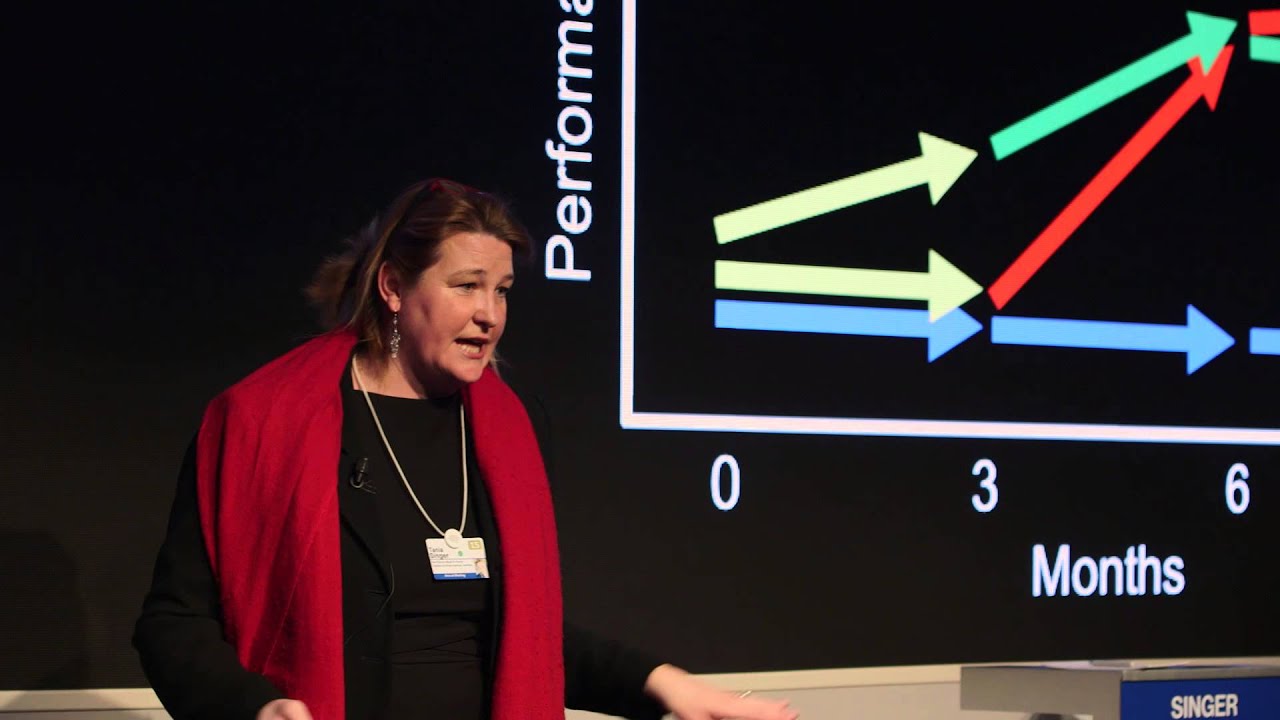
The Neuroscience of Compassion
Tania Singer, PhD
Empathy and compassion are different brain states, and one depletes while the other sustains.

A Fearless Heart
Thupten Jinpa, PhD
Compassion is not a sentimental disposition. It is a trainable capacity, and training changes outcomes.