Compassionate Advocacy
If you are reading this, you are probably tired. You are probably carrying things no one else in the room can see. You may have spent weeks parsing test results, navigating phone trees, sleeping in chairs, and translating medical language for someone who can no longer translate it for themselves.
Advocacy of this kind is largely invisible work. It is rarely thanked. And the fact that you are doing it at all is one of the most consequential things in your loved one's care.
What follows is not a course in becoming a better advocate. You are already doing the work. It is, instead, a reflection on how to keep that work compassionate, especially in the moments when the system stops responding and the temperature in the conversation begins to rise.
When advocacy meets the edge
There is a particular kind of moment in a healthcare encounter that almost every family member eventually meets. You have asked a reasonable question and not been answered. You have flagged a change in your loved one and been told it is nothing to worry about. You have requested a callback that did not come.
The pattern repeats. And somewhere inside you, a quiet voice that has been polite for hours or days finally tightens. Your jaw sets. Your shoulders rise. You begin to rehearse, internally, what you are going to say next, and the sentences are sharper than the ones you would have said an hour ago.
This is not a failure. This is a body protecting someone it loves.
Fear, exhaustion, and repeated dismissal mobilize the same physiology that mobilizes any of us in danger, and the resulting state is not designed for skillful conversation. It is designed for combat. Advocacy that begins from that state is more likely to be received as adversarial, even when the substance is exactly right.
Compassionate advocacy is not quieter advocacy. It is not less assertive. It is advocacy that comes from a regulated nervous system rather than a hijacked one.
Recognizing the signals
The skill is not in suppressing the surge. The skill is in noticing it. The earlier you notice, the more options you have. The signals are usually some combination of the following:
- Your heart rate climbs and your breath becomes shallow.
- Your language narrows to grievance: "they always," "no one ever," "nobody listens here."
- You begin mentally drafting the formal complaint while the conversation is still happening.
- The person across from you stops looking like a partner and starts looking like an obstacle.
- You feel a pull to win the conversation rather than to solve the problem.
Any one of these is a signal. Two or more is a clear sign that the part of your brain best equipped for advocacy, the part that can hold complexity and craft a strategic request, has been temporarily set aside in favor of an older, simpler operating system. The work in that moment is not to push harder. The work is to come back online.
Six evidence-based pathways
None of them require you to swallow your concern. All of them allow you to bring it forward in a form the other person can hear.
Regulate your physiology before your words
Sixty seconds of slow breathing, with the exhale longer than the inhale, will activate the vagal pathways that bring you back from sympathetic arousal. Step into the hallway. Splash water on your face. Press your back against a cool wall and feel the contact. The conversation will still be there. You will be more useful to it.
Use the structure of nonviolent communication
Observe specifically what happened. Name what is coming up for you, in the language of feeling rather than accusation. Identify what you need (clarity, partnership, safety, information). Make a specific and doable request.
"Why does no one ever tell me anything?"
"I noticed the medication change was not communicated to me. I'm scared. I need to be in the loop on changes like that. Could we set up a brief end-of-shift update?"
Use safety-advocacy language the system recognizes
Healthcare has its own internal vocabulary for raising urgent concerns. The CUS framework gives families three escalating words: "I am Concerned. I am Uncomfortable. This is a Safety issue." When something is genuinely urgent, naming it in those terms moves the conversation from interpersonal friction to safety protocol.
Practice self-compassion alongside advocacy
People who treat themselves with kindness during hard work have more stamina, less burnout, and clearer judgment than those who berate themselves for being scared, angry, or overwhelmed. You are not failing because you have feelings. You are doing this with feelings, which is the only way it is ever done.
Reframe from winning to partnering
Most clinicians, even the ones who frustrate you, did not enter healthcare to harm your loved one. Many are themselves strained, working in systems suffering their own form of occupational distress. Naming the shared goal early, "we both want my mother to recover well, can we figure this out together," can change the entire room.
Repair after rupture
You will lose your composure sometimes. Everyone does. The most powerful thing you can do after a sharp moment is name it briefly and continue: "I was sharper than I meant to be a moment ago. I'm scared and tired. Can we start again?" Repair re-establishes the alliance and tells the care team you remain a partner, not an adversary.
Extending compassion to the clinician
There is one more practice, perhaps the most difficult and most transformative: offering compassion to the very person who seems to be failing your loved one.
The clinician standing before you is almost certainly exhausted. They may be carrying the weight of dozens of patients, each with families who need them to be fully present. They may have just delivered devastating news to another family down the hall. They may be working their third consecutive twelve-hour shift in a system that has been running on fumes for years.
This does not excuse unskillful behavior. It does not mean your concerns are less valid. But it does mean that the person across from you is also a human being who is trying, even when the trying looks imperfect to you.
A practice for the hard moments
When you feel the frustration rising, before you speak, take one slow breath. Look at the clinician, not as an obstacle, but as a person who chose this work because they wanted to help people. Then, silently, offer them these words:
May you be well.
May you be at ease in your work.
May you be free from suffering and its causes.
This is not magical thinking. It is a neurological reset. The brain cannot simultaneously generate hostility and genuine well-wishing. The phrases activate the same compassion circuits that protect clinicians from burnout, and they work just as well for family members in crisis.
You do not have to feel the words perfectly. You only have to mean them enough to say them. The conversation that follows will be different. You will be different in it.
Remember: The clinician who seems rushed or distracted is not your enemy. They are a fellow human navigating a system that often makes compassionate care difficult. When you extend compassion to them, you create the conditions for them to extend it back to your loved one.
Why this matters beyond the moment
Compassionate advocacy is not a soft request. It is a survival skill for the long fight. Family caregivers who remain in a sustained state of adversarial activation experience higher rates of depression, sleep disturbance, and physical illness.
They are also more likely to be perceived by the care team as a problem rather than a partner, and that perception, fair or not, can subtly affect the texture of the care their loved one receives over time.
- Commands and demands
- Taking over conversations
- Ignoring clinician responses
- Verbalizing understanding
- Asking gentle confirming questions
- Allowing silence
Resources worth knowing
Nonviolent Communication
Marshall Rosenberg
The foundational text on observation, feeling, need, and request as the four moves of compassionate communication.
Self-Compassion
Kristin Neff, PhD
The accessible synthesis of two decades of self-compassion research.
Compassionomics
Stephen Trzeciak, MD & Anthony Mazzarelli, MD
The scientific case that compassion in healthcare measurably changes patient outcomes, including for families who are part of the care.
Further Reading
Perspectives on family caregiving and self-compassion during difficult times.
The Family in the Hallway
Family bereavement trajectories are shaped, decades later, by minutes of clinician presence during the worst week of their lives.
Self-Compassion Is Not Self-Indulgence
The research is clear: being kind to yourself makes you more effective, not less.
What Compassion Does to a Patient You Will Never Meet
Compassion is not adjunctive to clinical care. It changes hemoglobin A1c, immune function, and mortality in patients you will never meet.
Cultivating Compassion Within
The internal work: neuroscience and the practices that sustain sustainable caring.
Watch and Learn
Talks on end-of-life care, compassion, and what really matters.

What Really Matters at the End of Life
BJ Miller, MD
Most of what scares people about dying is not death itself. It is suffering that did not need to happen.
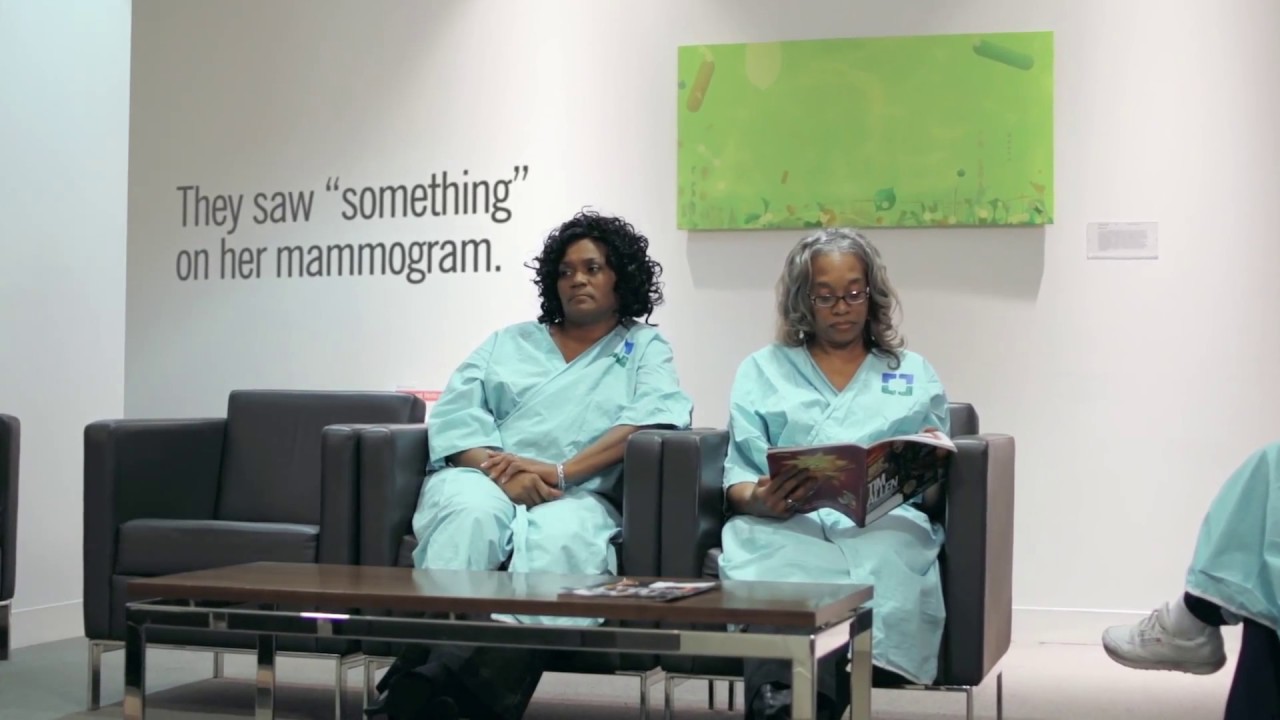
Empathy: The Human Connection to Patient Care
Cleveland Clinic
Every person in a hospital is carrying something the staff cannot see.
Your role matters. Your stamina matters.
Your composure is not for the comfort of the system. It is for the long endurance of the love that brought you here in the first place.