Compassionate Leadership
An Operational Definition for the People Responsible for How Others Experience Their Work
Compassionate leadership is the cultivated capacity of a person in formal or informal authority to:
- Notice suffering and unmet need among the people they influence
- Interpret what they notice generously rather than punitively
- Hold the felt response to that suffering without absorbing it as their own depletion
- Take action that reduces suffering and builds the structural conditions under which others can flourish
This is a process definition rather than a trait definition. It specifies a sequence the leader executes, not a personality the leader possesses, which is what makes it operational.
Most working definitions of compassionate leadership describe a personality. The compassionate leader is warm, attentive, present, kind. These are accurate impressions, but they are not operational. They cannot be trained, audited, or recovered after a hard week. They cannot tell a leader what to do on Tuesday morning when a clinician on her team is unraveling and the schedule has nine more patients on it.
This page offers an operational alternative. Compassionate leadership, defined operationally, is the cultivated capacity to do four things in sequence: to notice suffering and unmet need, to interpret what is noticed generously, to hold the felt response without absorbing it, and to take action that reduces suffering and builds the structural conditions under which others can flourish. The four components are sequential, learnable, and observable.
In healthcare, one further construct makes the model complete. Speak-up culture is the team-level pattern that allows the leader's noticing capacity to scale beyond what one person can personally observe. It is a healthcare-specific operationalization of the four components, not a separate construct that competes with them. It appears here because in this field, it is how compassionate leadership is delivered or destroyed.
Compassionate leadership is what the leader does, not who the leader is. The shift from trait to process is what makes it teachable, repeatable, and sustainable.
The Four Operational Components
The components are sequential, but the sequence is also a loop: in any given week a leader is moving through it many times.
Notice
Attentional Discipline
The leader detects distress and unmet need before someone has to escalate it.
Interpret
Generous Interpretation
The leader's default attribution favors situational and structural explanations over character indictments.
Regulate
Compassion, Not Empathy
The leader feels concern without absorbing it; their affective state does not become a secondary problem the team must manage.
Act
Structural Action
The leader's response is calibrated to the structural condition that produced the suffering, not only to the surface presentation.
Necessary Conditions
A leader cannot demonstrate compassionate leadership in any sustainable form without three conditions in place. These are preconditions, not optional extras.
Self-compassion is the keystone.
A leader cannot extend to others what they cannot extend to themselves. Self-compassion (Neff, 2003) is the keystone of the Ryff (1989) eudaimonic well-being architecture. A leader operating without it produces performative compassion that the team detects and discounts.
Compassion is trainable.
Compassion training produces measurable changes after as little as two weeks of structured practice (Weng et al., 2013), with broader effects documented by Jazaieri et al. (2013) and Fredrickson et al. (2008). Compassionate leadership cannot be assumed from disposition. It requires deliberate practice.
Structural alignment is required.
A compassionate leader operating inside a structurally cruel system will be experienced as cynically performative no matter how authentic the personal practice. The structural alignment work is the subject of the For Healthcare Systems page.
“Without courage, we cannot practice any other virtue with consistency. We can't be kind, true, merciful, generous, or honest.”
What Compassionate Leadership Is Not
It is not transformational leadership.
Transformational leadership centers on vision and inspirational motivation. Compassionate leadership specifies a cognitive-affective-behavioral process. Compatible, not identical.
It is not servant leadership.
Servant leadership is a role orientation; compassionate leadership specifies the operational moves through which any other-oriented role is actually delivered.
It is decisively not empathic leadership.
Empathic leadership generates empathic distress in the leader, which produces depletion and eventual cynicism. The neuroscience makes this distinction precise (Singer & Klimecki, 2014).
A Self-Assessment for Compassionate Leadership
Six questions a leader can ask of themselves on a Friday afternoon. Honest answers are more valuable than complete ones.
- 1
When was my last full one-on-one with each direct report? If the answer is more than two weeks for anyone, my noticing has structural gaps.
- 2
In a recent corrective conversation, what did I investigate before issuing the correction? If the answer is "nothing," my interpretation is defaulting to character.
- 3
After my hardest conversation this month, did I leave with energy or without it? Compassionate engagement preserves energy; empathic absorption depletes it.
- 4
In response to my team's most recent visible distress, did I act on the producing condition or on the surface presentation?
- 5
If a team member saw something concerning today, would they bring it to me unprompted? If I am not sure, the speak-up conditions are not yet what they need to be.
- 6
If a serious adverse event happened on my unit this week, would my first response preserve or destroy the conditions for honest reporting?
Compassionate leadership is the trained capacity to notice suffering and need, interpret it generously, hold concern without absorbing it, and take structural action that reduces suffering and builds conditions for others to flourish, with speak-up culture as the team-level scaling of attention.
For the structural conditions that make compassionate leadership sustainable
Read For Healthcare Systems
Leaders deliver behavior. Culture builds the conditions that make the behavior possible to sustain. The For Healthcare Systems page treats the six conditions for compassionate culture, the structural redesign of performance management, peer support, and crisis response, and the implementation roadmap for systems leaders. Read it as the structural companion to this page.
Read For Healthcare SystemsFeatured Videos
Curated talks on compassionate leadership and creating psychological safety.

Why Good Leaders Make You Feel Safe
Simon Sinek
Great leaders create a circle of safety. When people feel protected by leadership, the natural response is trust and cooperation.
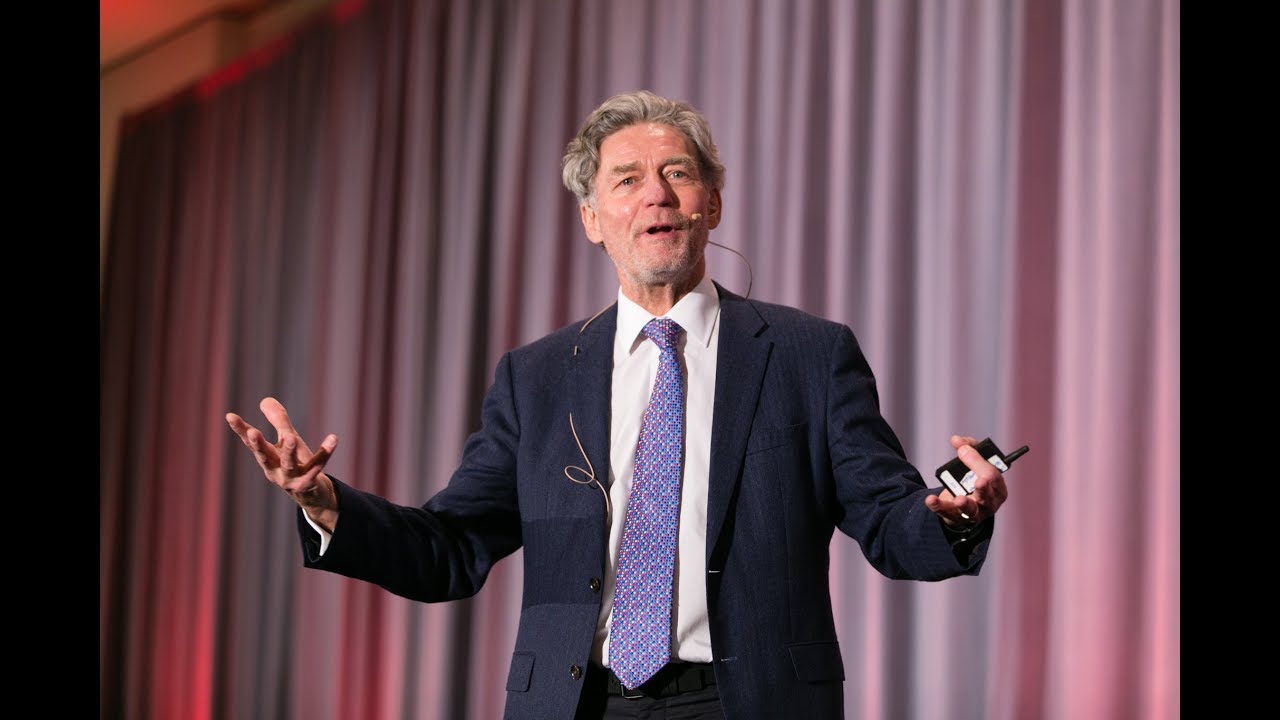
Compassionate & Collective Leadership for High Quality Health Care
Michael West, PhD
Compassionate leadership in healthcare is the trained capacity to attend, understand, empathize, and help. It is learnable, structural, and directly tied to patient outcomes.
Related Reading
Curated articles for healthcare leaders developing compassionate leadership practices.
The Front Desk Is the First Dose of Medicine
Why Ferrazzi was right, and why healthcare is trading compassion for convenience.
The Schwartz Compassionate Care Model: A Roadmap for Organization-Wide Compassion
After two decades of research and field experience, the Schwartz Center for Compassionate Healthcare has released a comprehensive framework for embedding compassion into organizational culture. The six-domain model moves compassion from individual aspiration to institutional architecture.
The Four Behaviors of Compassionate Leadership
A clear definition of what compassionate leadership actually is, why it produces the best outcomes in the highest-stakes environments, and where to start practicing it tomorrow.
The Mentor Mindset Is What Compassionate Leadership Looks Like
David Yeager's three-mindset framework names the false choice that is quietly damaging healthcare leadership, and provides the third path the compassion literature has been pointing at without naming.
Care differently, not less.